Sign up for any Envirocare Insights & Updates
Stay informed about newly developed methods, updated accreditation statuses, and the latest industry news.
Please select the industry & testing focus areas relevant to you.
1
Step 1

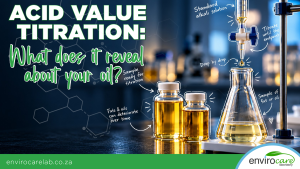
Acid value testing is an important chemical analysis used to assess the quality and condition [...]
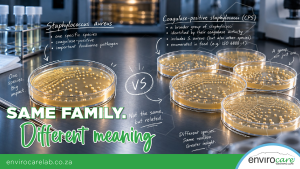
Food businesses have many microbiological hazards to consider, but some risks can be particularly challenging [...]
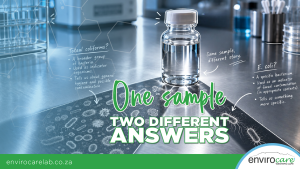
When water is submitted for microbiological testing, the laboratory report may include results for Total [...]
Disinfectant efficacy testing provides manufacturers with scientific evidence that a disinfectant performs as intended against [...]
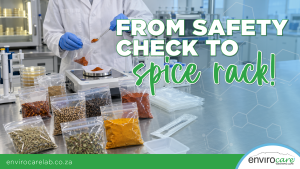
Spices and dried herbs are widely used as ingredients in food manufacturing. From spice blends [...]

Food safety does not begin when a product enters the cooking process. It starts much [...]
Clostridium botulinum testing in honey is an important consideration for honey producers, beekeepers, processors, packers, [...]
What is Clostridium perfringens? Clostridium perfringens is a spore-forming bacterium commonly found in soil, dust, [...]

Heavy metal contamination can be a concern in products intended for human consumption or use. [...]
UV Transmittance (UVT) is one of the most important, but often overlooked, parameters for facilities [...]
